THE SIGNALSHIELD FAMILY

Three platforms. One field-ready control concept.

Each model uses the same phone-centered operating logic while matching the number of display faces, base and mission to its intended scene.

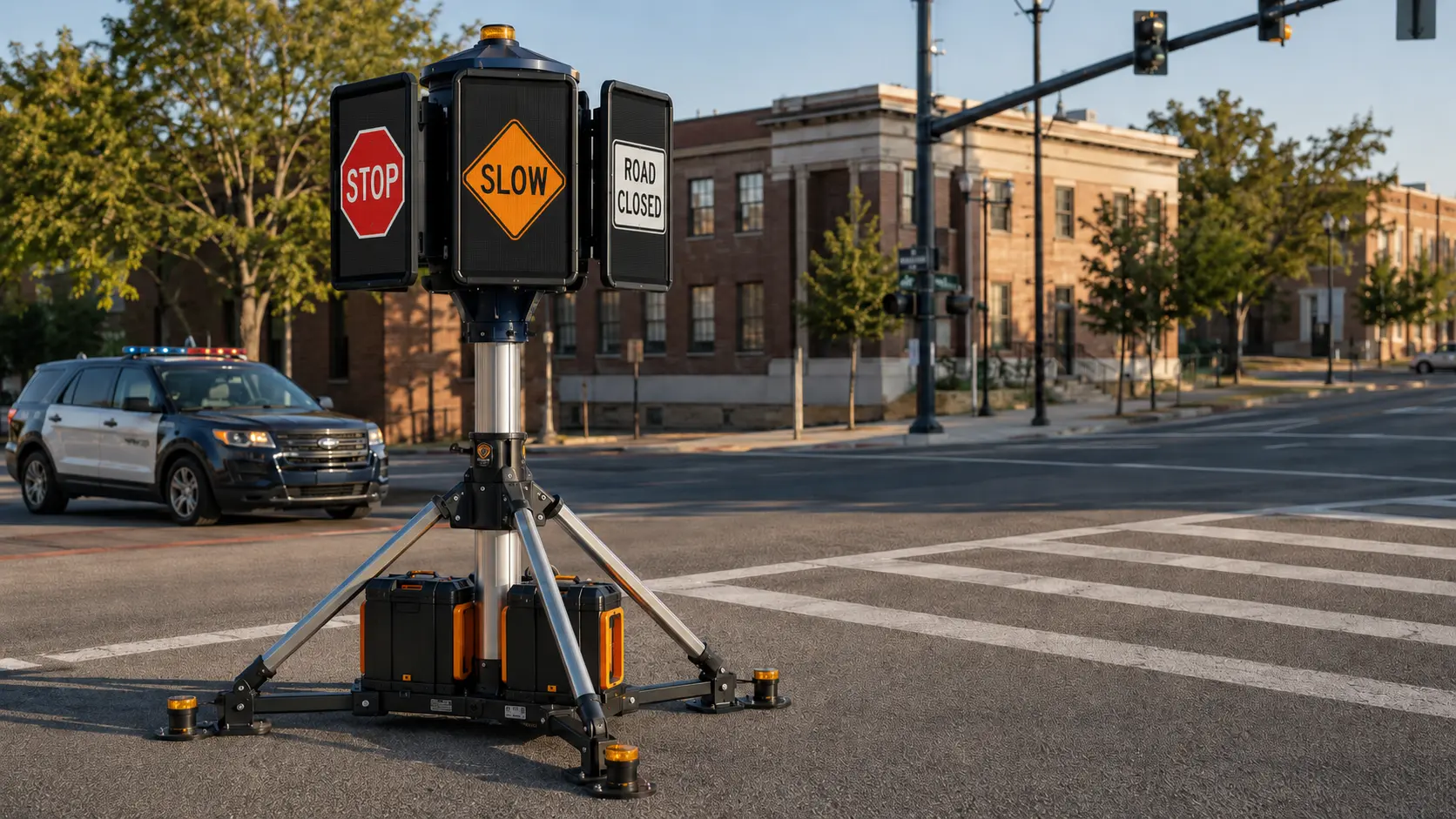
SignalShield Response four-panel prototype deployed at an urban intersection01APPROVED CONCEPT VISUALIZATION
Four-panel incident platform

SignalShield Response

A portable, remotely supervised four-direction platform for complex incidents and temporary intersection control.

Best-fit use cases

  • Dark intersections and signal outages
  • Crash and emergency response scenes
  • Temporary road closures and detours
  • Severe weather and disaster operations
  • Events, checkpoints and controlled access
  • Temporary speed and lane messaging

Concept features

  • Up to four independently assigned display nodes
  • Telescoping mast with stabilized battery base
  • Automatic discovery, pairing and role assignment
  • Local-first control with bounded fail-safe states
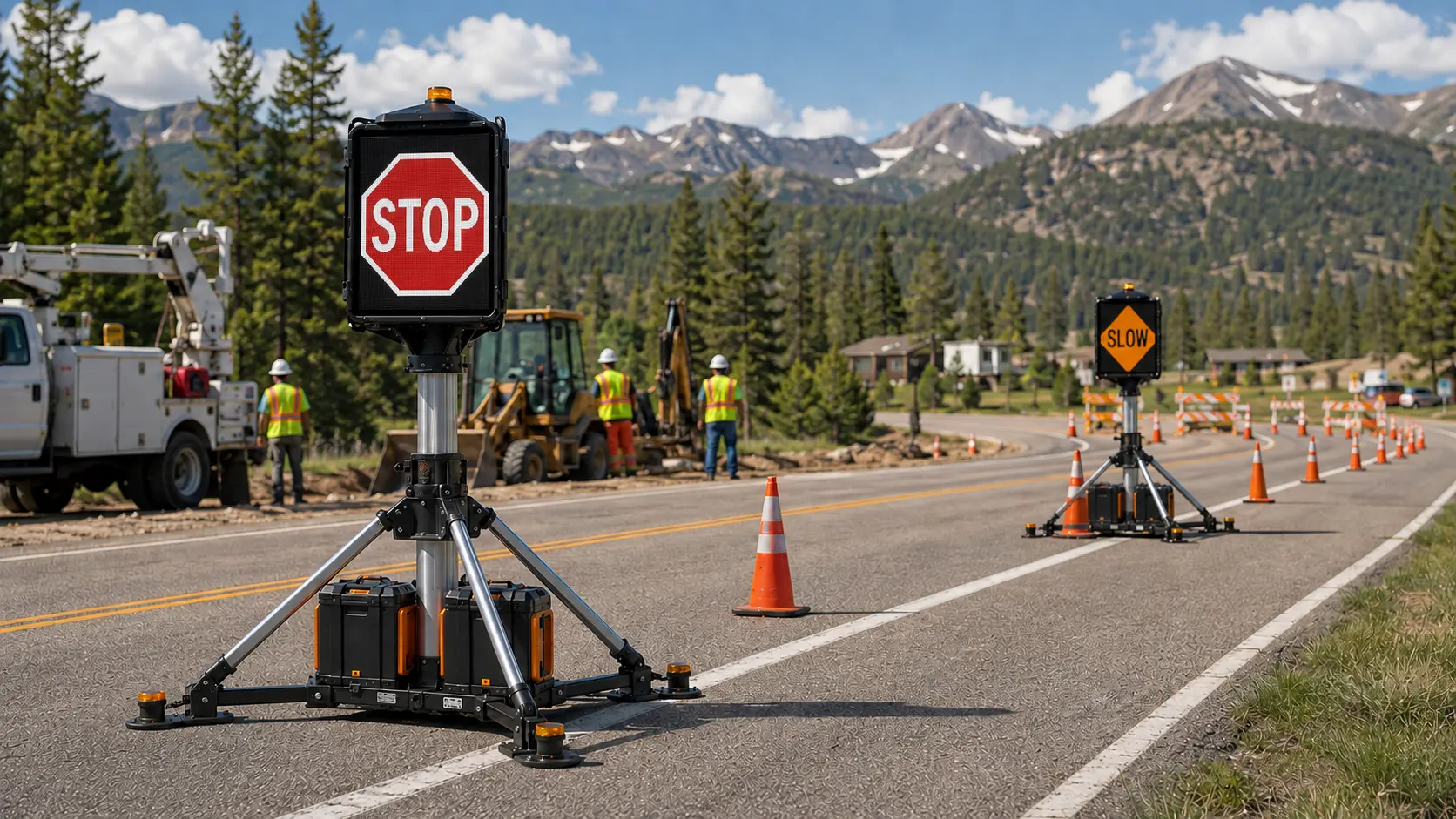
Two SignalShield WorkZone units displaying STOP and SLOW in a mountain road work zone02APPROVED CONCEPT VISUALIZATION
Dual-panel road-work platform

SignalShield WorkZone

A two-face platform designed for temporary work zones, alternating traffic and rapidly changing lane conditions.

Best-fit use cases

  • Alternating one-lane traffic
  • Short-duration lane closures
  • Reduced-speed work zones
  • Night construction and maintenance
  • Lane shifts, merges and detours
  • Crew and equipment ingress points

Concept features

  • Two independently controlled high-visibility faces
  • Paired STOP/SLOW and signal sequencing
  • Quick-deploy wheeled base and telescoping mast
  • Work-zone sign library and manual override
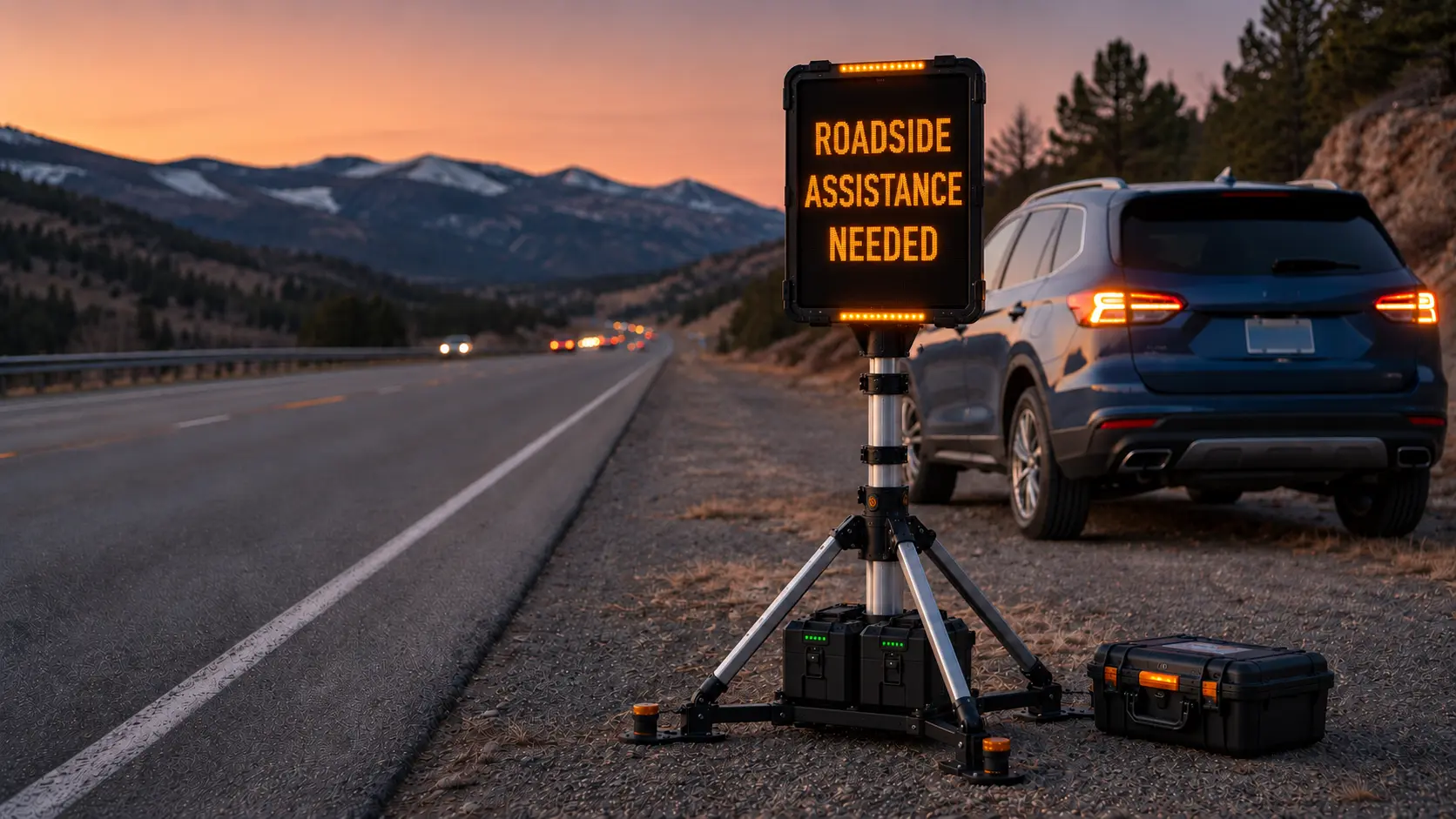
SignalShield Roadside prototype displaying CAUTION beside a stopped vehicle at dusk03APPROVED CONCEPT VISUALIZATION
Single-panel personal marker

SignalShield Roadside

A compact emergency marker concept for drivers, fleets and roadside support teams who need early hazard visibility.

Best-fit use cases

  • Disabled vehicles and breakdowns
  • Roadside tire or mechanical emergencies
  • Temporary shoulder hazards
  • Fleet and service vehicle visibility
  • Weather-related roadside stops
  • Personal emergency preparedness

Concept features

  • Single bright, portable warning face
  • Compact weighted base and collapsible mast
  • Fast hazard-mode selection from a phone
  • Battery-powered visibility without a vehicle connection
DEVELOPMENT BOUNDARY

Prototype visuals are not product certification.

Current rugged-display implementations are intended for bench and closed-course research. Public-road modules require the appropriate display class, engineering evidence, testing, jurisdiction review and road-authority approval.