PATENT PENDINGWORKING PROTOTYPE CONCEPT

Keep responders out of live traffic.

SignalShield is a portable, locally supervised traffic-control platform that lets responders and road crews deploy one-, two- or four-screen units, coordinate several devices and manage a scene from a safer position. Planned 5G/LTE backhaul and an optional shared-platform satellite module extend protected supervision to Central Command without removing the field controller from the safety path.

Up to 6 linked unitsResponder 4 and WorkZone 2 can manage a primary unit plus five peers
Local-first + rural reachWi-Fi and Bluetooth nearby; planned 5G/LTE with optional satellite fallback
3 core modelsFour-, two- and one-screen configurations
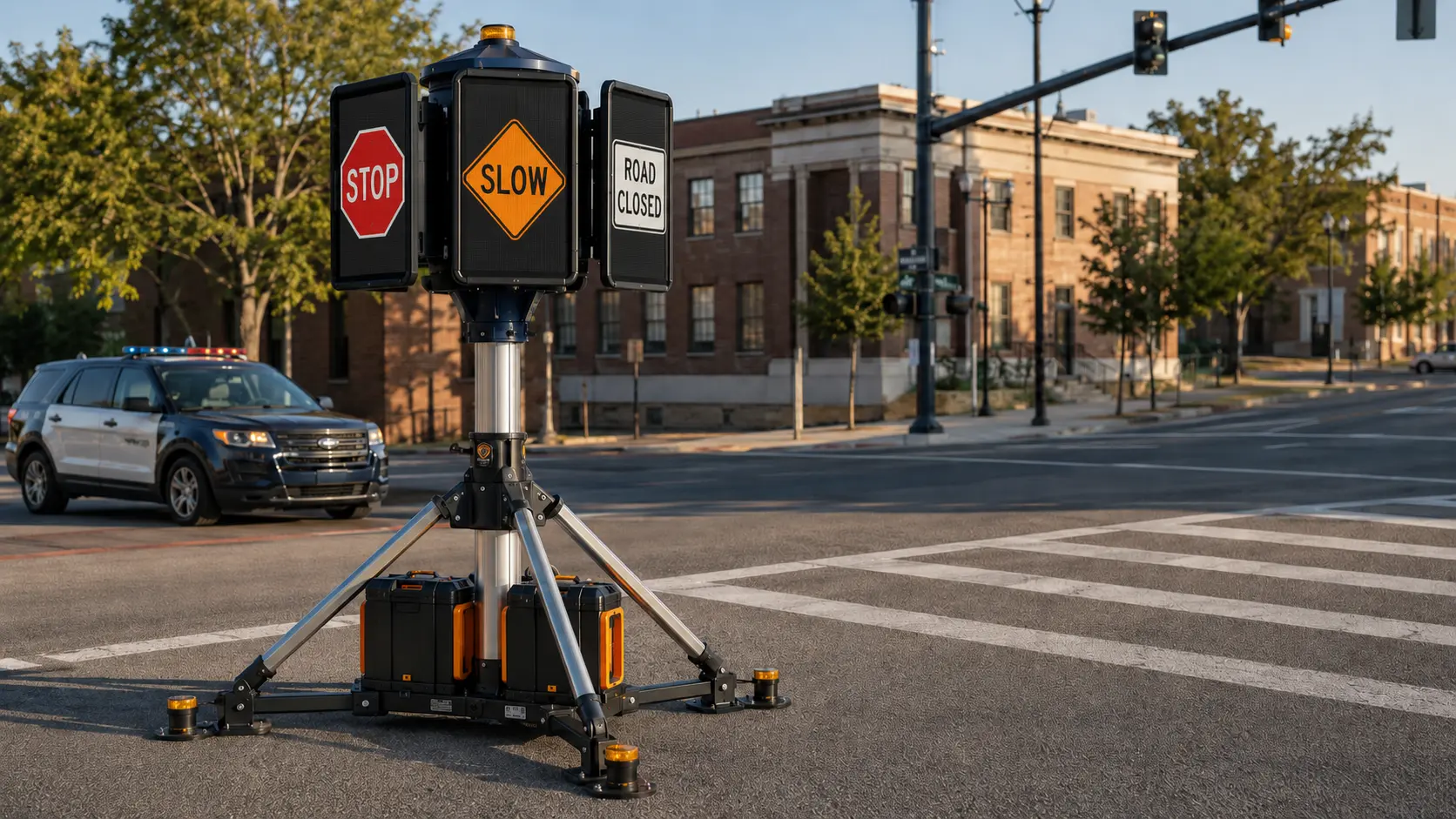
Responder 4 deployed at an intersection
RESPONDER 4
THREE CORE PRODUCTS · ONE SHARED PLATFORM

Choose the model for the scene.

Compare full specifications
SignalShield Responder four-panel prototype deployed at an urban intersection
01
Four-panel incident platform

SignalShield Responder 4

A portable, remotely supervised platform with one physical road position and heading and one to four installed display sides. Its communications design combines local Wi-Fi and Bluetooth with planned dual-SIM 5G/LTE backhaul and an optional shared-platform satellite module for rural Central Command coverage.
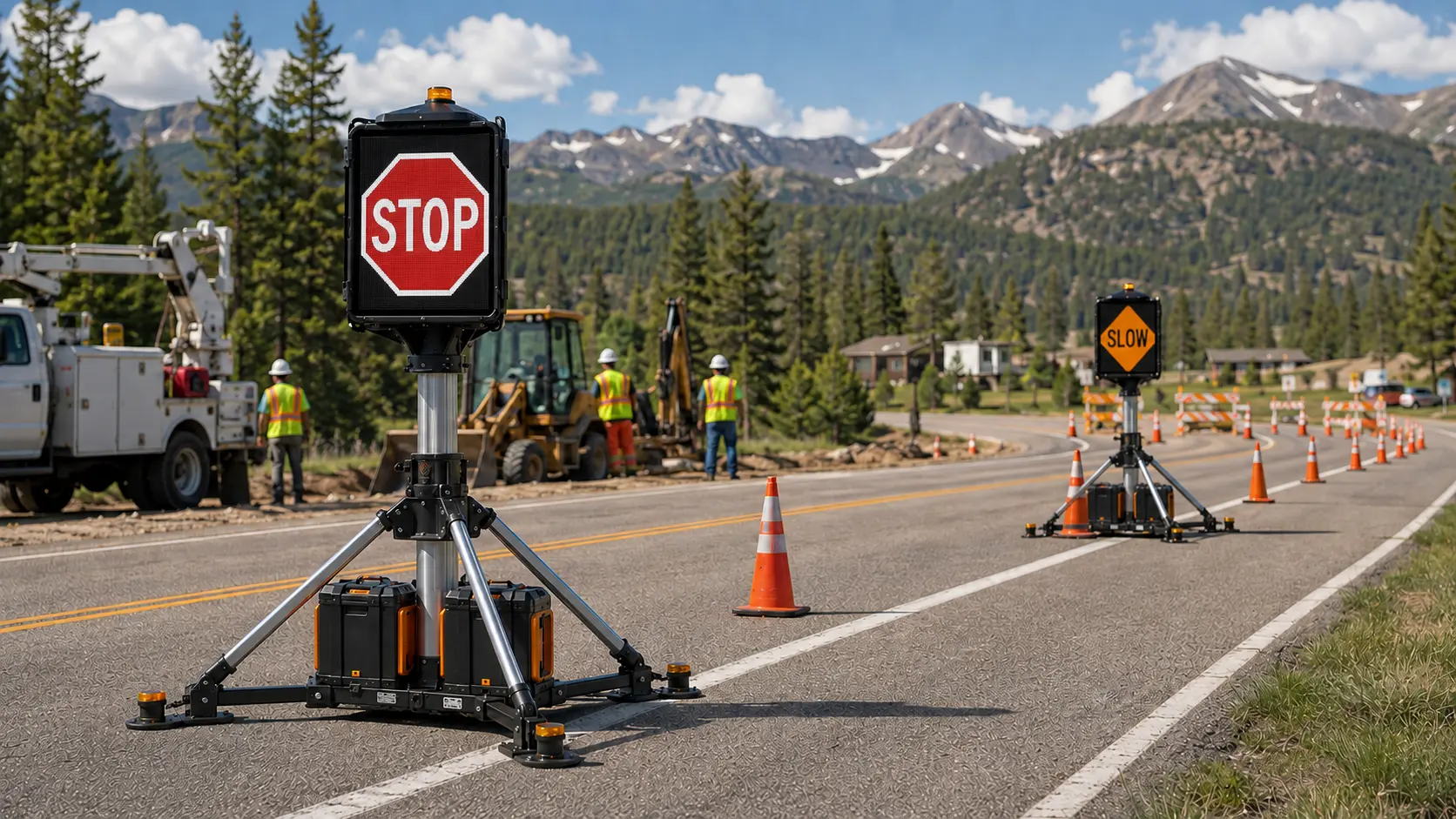
Two SignalShield WorkZone units displaying STOP and SLOW in a mountain road work zone
02
Dual-panel road-work platform

SignalShield WorkZone 2

A one- or two-side platform with one physical road position and heading for temporary work zones. Its communications design combines local Wi-Fi and Bluetooth with planned dual-SIM 5G/LTE and an optional shared-platform satellite module for rural Central Command supervision.

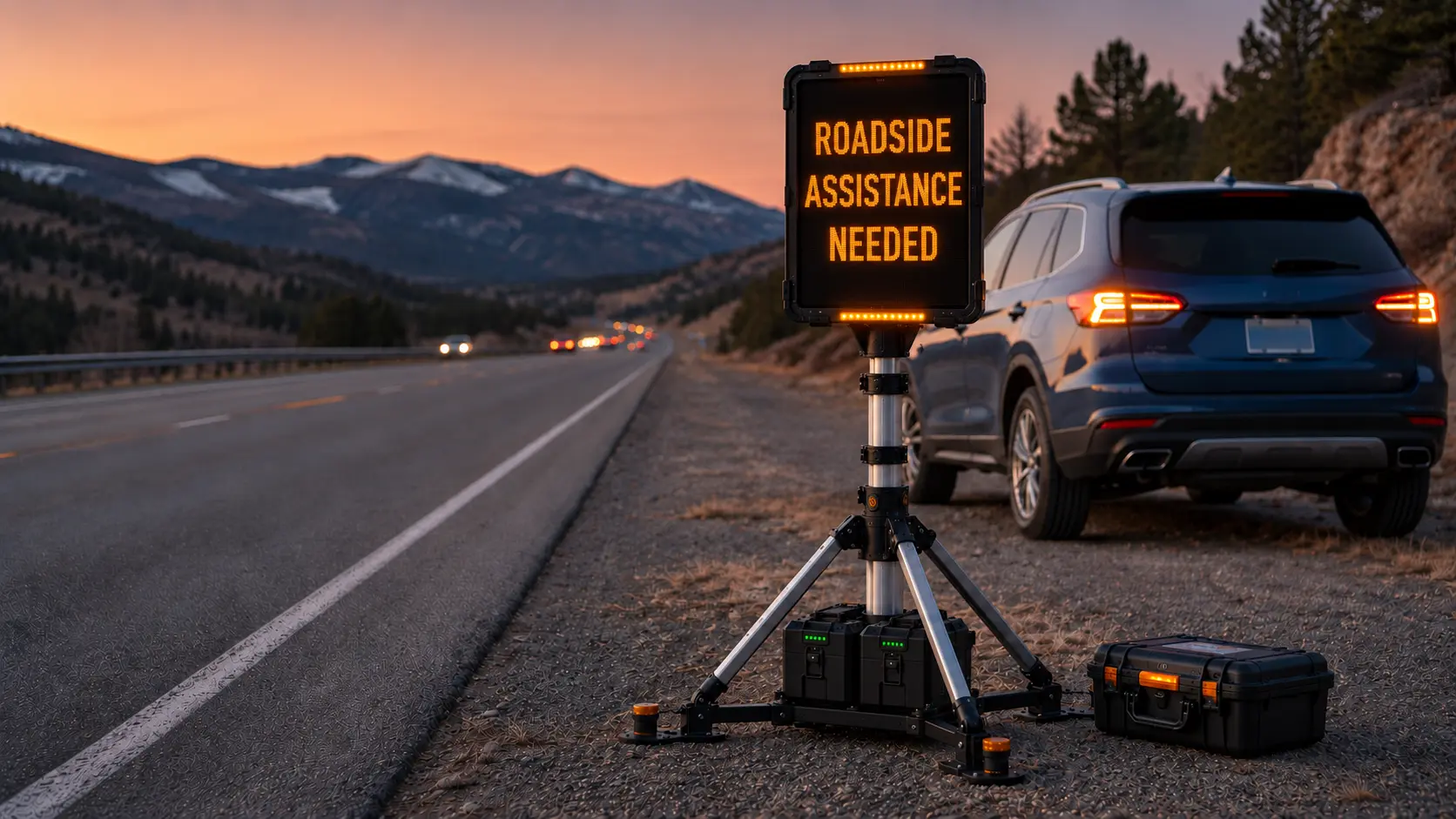
SignalShield Roadside 1 with one screen displaying ROADSIDE ASSISTANCE NEEDED beside a stopped vehicle at dusk
03
Single-screen roadside warning platform

SignalShield Roadside 1

The same hardware platform as Responder 4 and WorkZone 2, fitted with one 18-inch screen and warning control for up to three paired devices. Its configurable civilian profile presents multiple DOT-standard warning and directional messages for roadside emergencies, temporary hazards and changing conditions.

PERSONNEL EXPOSURE + FIELD SEQUENCES

See what moves out of the roadway.

Each comparison shows the same traffic-control task before and after the portable system assumes the roadway position. Trained personnel remain responsible for supervision and the approved traffic-control plan.

01
FOUR-SCREEN INCIDENT PLATFORM

Responder 4

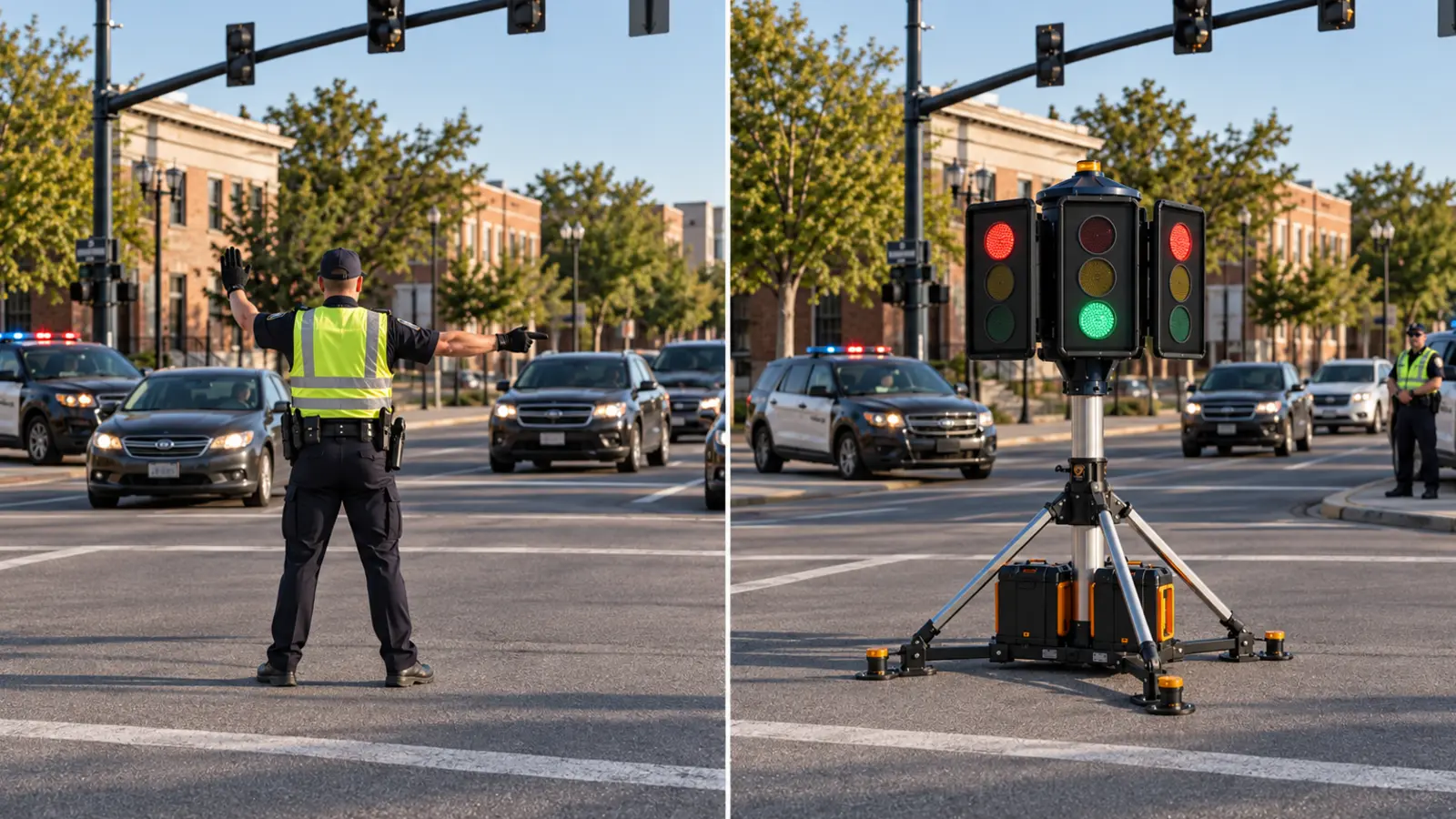
Split comparison showing an officer directing traffic in an intersection and Responder 4 controlling the same intersection while the officer supervises from the curb
Personnel exposure comparisonOfficer in the intersection → Responder 4 in the intersection, supervised from the curb.
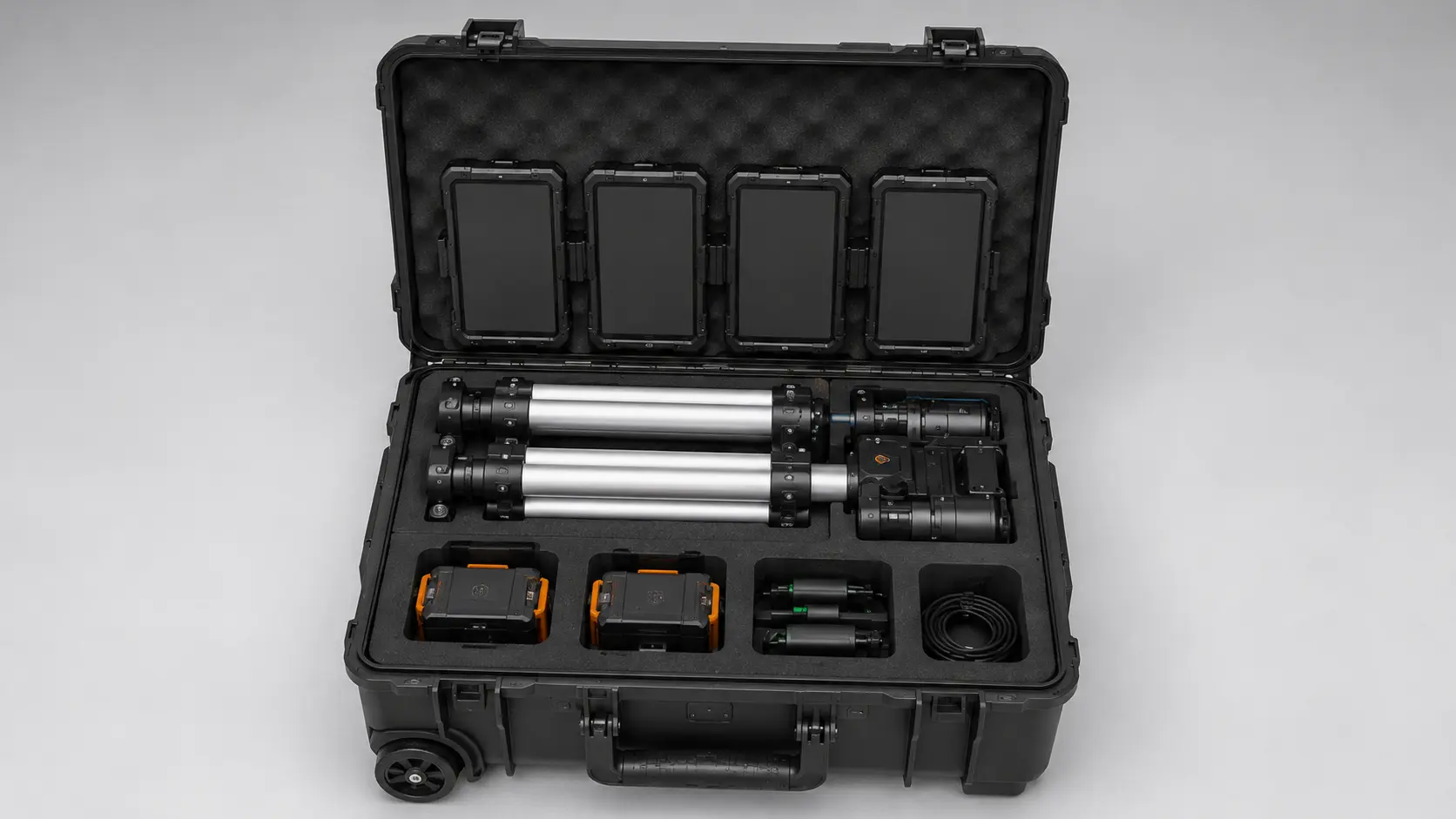
Responder 4 components organized in a wheeled transport case
Portable system case
02
TWO-SCREEN WORK-ZONE PLATFORM

WorkZone 2

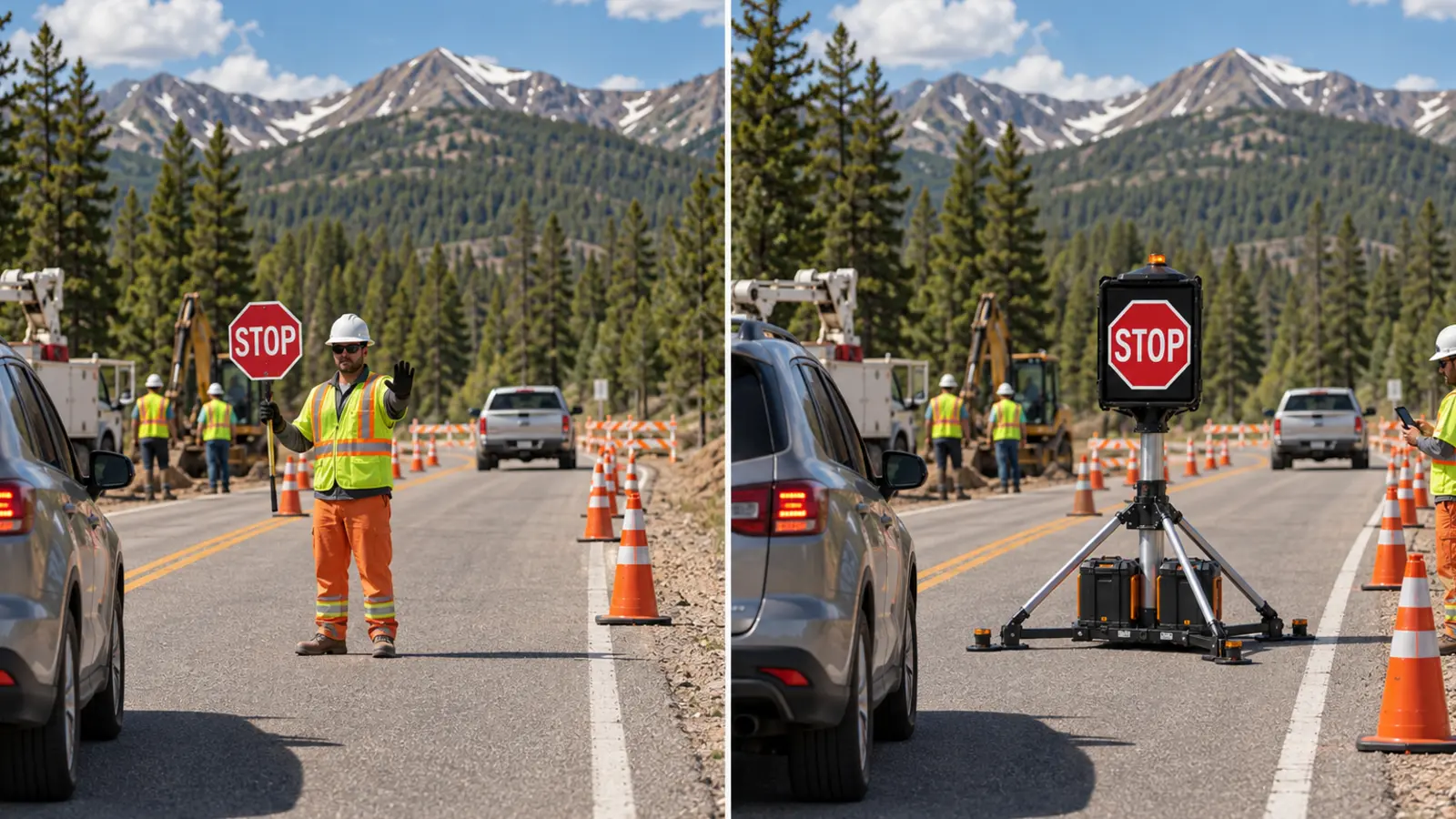
Split comparison showing a flagger standing in a live work-zone lane and WorkZone 2 controlling the same lane while the flagger operates from the protected shoulder
Flagger exposure comparisonFlagger in the live lane → WorkZone 2 in the lane, controlled from the protected shoulder.
Paired WorkZone 2 units directing traffic through a lane closure
Alternating-traffic deployment
HOW THE FIELD GROUP WORKS

Place it once. Coordinate the scene locally.

Each unit keeps its physical position, display roles and model limits. The controller discovers the group, applies the scene plan and keeps conflicting traffic movements from being released together.

Try the Control Lab
  1. 01
    Connect

    Use Wi-Fi or Bluetooth locally, with planned 5G/LTE and optional satellite backhaul for Central Command.

  2. 02
    Place

    Set each unit on the road layout and assign its installed display sides.

  3. 03
    Operate

    Apply the permitted signal sequence or select an approved roadside sign.

  4. 04
    Protect

    Timing, acknowledgements and local fail-safe logic guard every change.

FIVE FIELD USE CASES

One platform, configured for the job.

Professional traffic control remains separated from the limited civilian Roadside 1 profile.

01Emergency responseResponder 4

Temporary intersection control, signal outages, crashes, closures and incident scenes.

02Work zonesWorkZone 2

Alternating traffic, lane closures, maintenance operations and temporary construction routes.

03Roadside emergenciesRoadside 1

Civilian and fleet warning messages for disabled vehicles, shoulder hazards and changing conditions.

04School crossingsWorkZone 2

Supervised arrival, dismissal and event crossings with the operator positioned on the sidewalk.

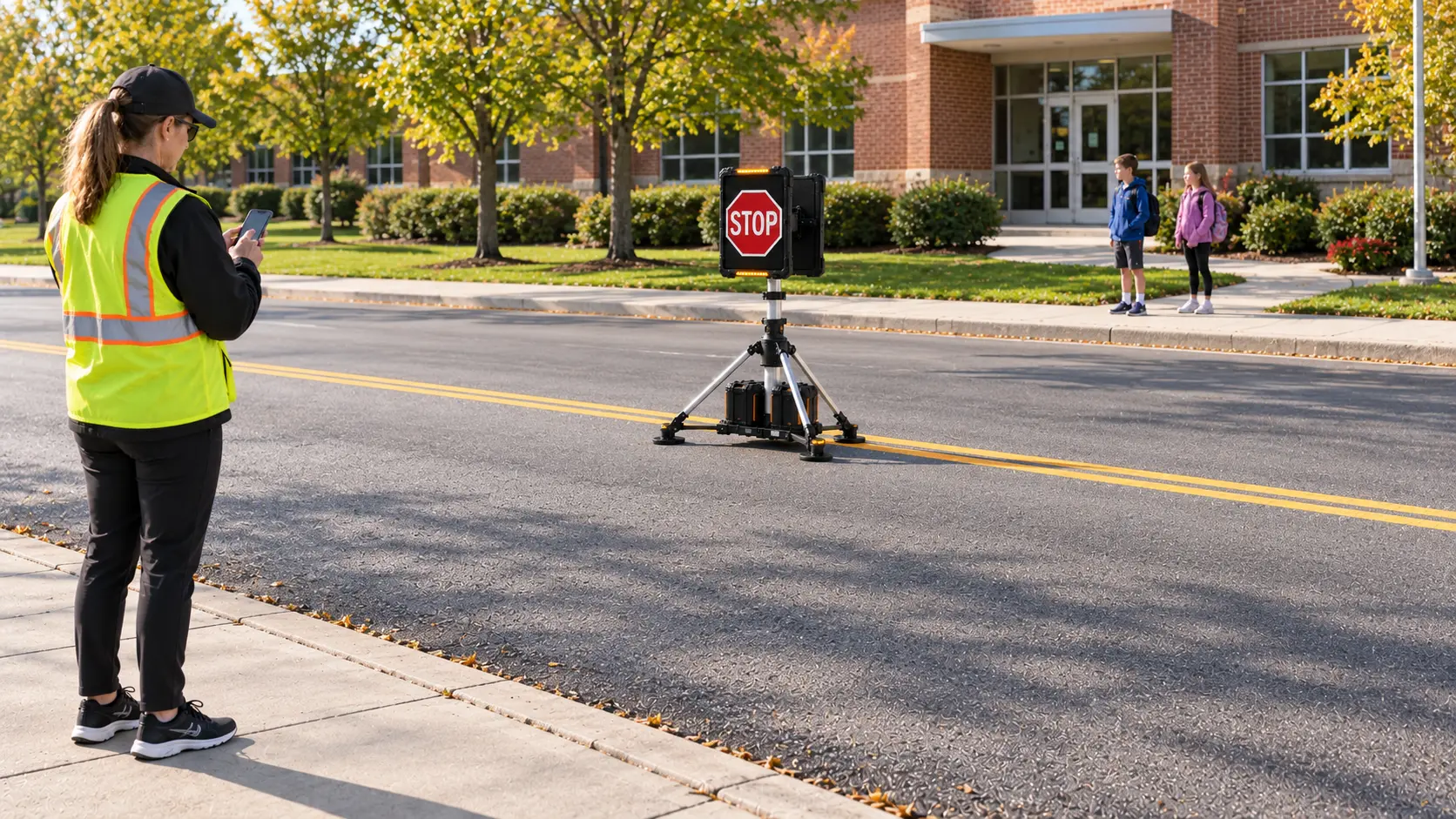
Crossing guard operating one WorkZone 2 from the sidewalk while the unit is positioned in the road
School crossingOne WorkZone 2 in the roadway; the crossing guard remains on the sidewalk.
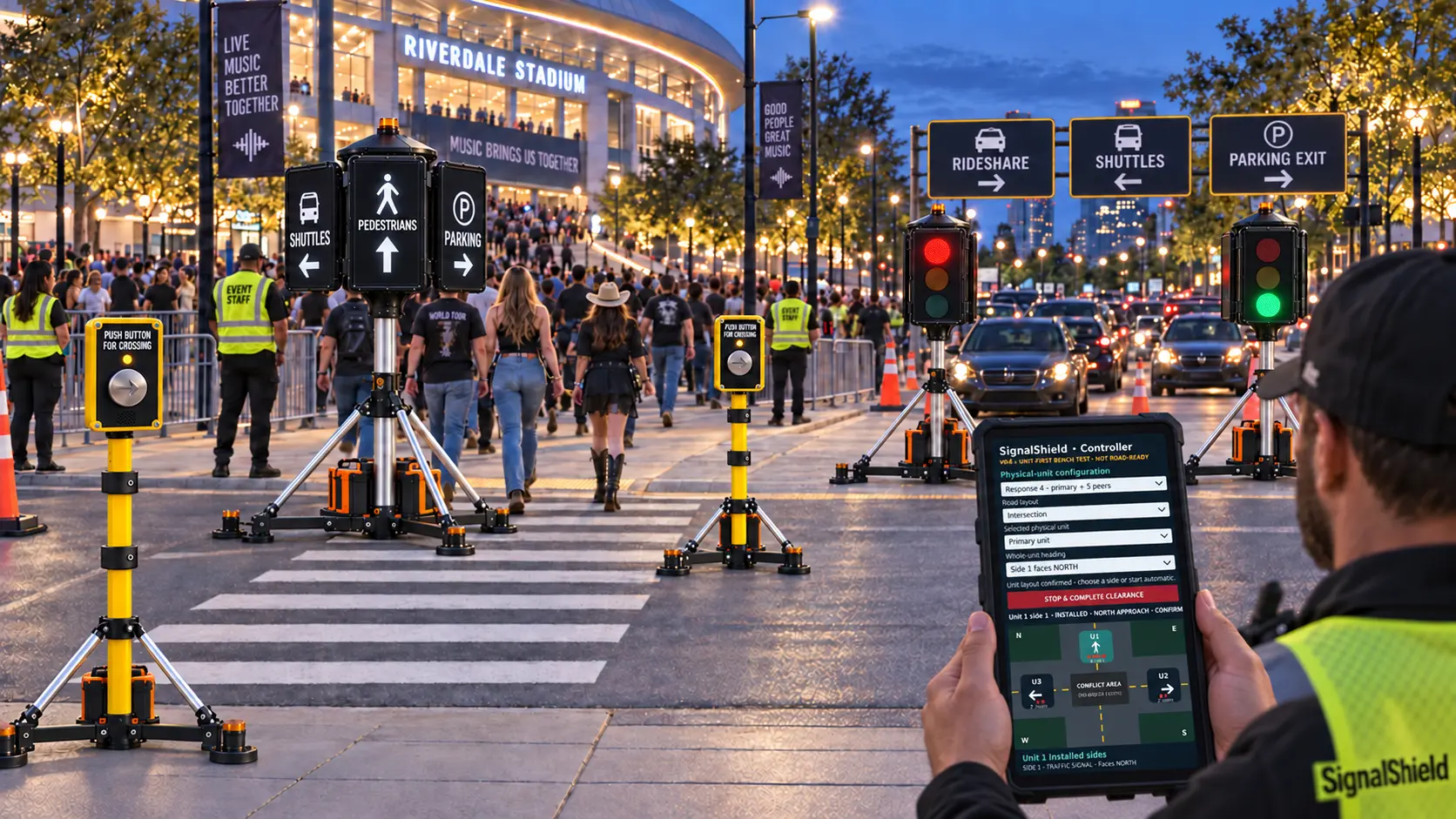
Responder 4 showing Shuttles, Pedestrians and Parking directions outside a stadium, with compact PedCall units and separate WorkZone 2 traffic signals
Venue Pedestrian Package concept · Dedicated wayfinding on Responder 4; separate devices manage vehicle signals.
05 · STADIUMS, CONCERTS & SPECIAL EVENTS

SignalShield Venue Pedestrian Package

Turn Responder 4 into a four-sided venue guide. A separate software add-on assigns pedestrian routes, shuttle pickup, parking and rideshare directions to each installed face—using the same mast, base and display hardware.

Prepare arrival and egress plans, preview each side and keep pedestrian requests separate from traffic-release decisions.

Explore the pedestrian add-on
OPTIONAL ADD-ONS

Visibility, supervision, rural reach, venue guidance and charging.

Explore Camera 2, Central Command, Satellite Link Module 1, the Venue Pedestrian Package and dual-bay charging without changing the three core model lineup.

Explore add-ons
HELP SHAPE THE PROTOTYPE

Bring your real traffic-control problem.

Agencies, road crews, safety engineers and strategic partners can start with a requirements conversation.

Request a demonstration